LISA LANE COMEDY

finding the funny in parenting, marriage, and middle age
  • VIDEO+PHOTOS+BIO
  • Comedy Shows
  • FOR PARENTS
  • CORPORATE EVENTS
  • Voiceover/Announcing
  • CONTACT
  • VIDEO+PHOTOS+BIO
  • Comedy Shows
  • FOR PARENTS
  • CORPORATE EVENTS
  • Voiceover/Announcing
  • CONTACT

Blog

Real-life advice for frazzled, frustrated families. Lisa Lane Filholm shares frank and funny observations from her time in the trenches otherwise known as high-school English class.

  • All
  • How to Talk to Teens
  • KNOW-PROTECT-HONOR
  • Role Models Who HONOR
  • Role Models Who KNOW
  • Role Models Who PROTECT
  • The Great Weed Debate
  • Why Teenagers Suck
  • Why We Must Not HIBERNATE

Eight Minutes Too Late: The Beautiful Agony of Natural Consequences

Lisa Lane November 1, 2014

I continue to be a big fan of the good doctors at Love and Logic, who preach the power of natural consequences. Their wisdom resonates identically with parents of toddlers and parents of teens. It is agonizing, watching our kids suffer the results of their actions, but it is worth it. Every single time, they grow and learn and take one giant leap toward responsible adulthood.

A Cautionary Tale of Consequences: Here's a Good One for You.

A young man in Denver, Colorado rushed home one afternoon to put the final touches on a scholarship application, due that very day. This high school junior is mature, well-spoken, bright. He does well in school, plays sports, works a steady job. He knows a lot of things about the great big world, but he didn't know (until this particular afternoon) about the importance of time zones. 

Dollarphotoclub_55403901.jpg

This intrepid boy submitted his online application at 2:08 PM, happily in advance of his 4:00 deadline. His email was immediately rejected; the application process was closed; the website went blank. The deadline, of course, was 4:00 PM Eastern Standard Time (whereas our unwitting hero lives in the  Mountain Time Zone). He missed out on the promise of a dream by eight minutes.

His mama might have lectured or blown her top. You can bet she envisioned thousands of dollars circling right down the drain; I am certain she has repeated, "eight lousy minutes" in varying tones of dismay to all her friends.

Instead, she recognized the shock and disappointment in her baby's eyes. She saw the resignation and regret--familiar to cynical adults--which fester when doors slam shut. She knew no one was more sorry than her son about the opportunity he had just missed. Instead of chiding him, instead of frantically emailing powerful people to finagle an extension, she took a deep breath along with him and carried on.
The lessons he learned were many, in that moment and in the following days. Natural consequences are a bitch. He will probably be more careful about deadlines hereafter. He is practicing the art of handling disappointment. Because he is young and gifted--and because the world is bountiful--he will have countless other opportunities. He faced frustration, panic and anger at himself and survived. He learned these feelings--like all feelings--are temporary.

To my way of thinking, there are few lessons more valuable for adolescents to learn. Feelings are temporary.

Agonize Less When Teens Falter. Enjoy More. They're Learning!

Love and Logic parents try to enjoy watching their toddlers make stupid mistakes. The natural consequences of these actions (repeat the parents to themselves behind clenched smiles) produce exactly the results we desire. Kids will only remember their coats if they have felt the chill of forgetting them, or their lunches if they have felt hunger pangs at noon. 

Parents of teenagers, let's try to look at it the same way. One of the teenagers in my very own home accuses me of "loving it when kids get in trouble." He may have a point. I do enjoy watching teenagers face the music, be responsible, suffer the consequences of their idiotic actions. Nothing less will save them from themselves. 

When we parents rush to solve their problems and rescue them from natural consequences, we deny our children the gift of learning how to fail.

“We are all faced with a series of opportunities—brilliantly disguised as insoluble problems.”
-John Gardner”


In Role Models Who HONOR Tags Push Them (Falcon)
Comment

One More Damned Vote in Favor of Family Dinner

Lisa Lane October 31, 2014

If the tyranny of dinner (So much pressure! So much compelling, guilt-inducing evidence in its favor!) sends you over the edge, I am sorry to share this terrible news. The importance of Family Dinner grows right along with our progeny. The good news is, pizza counts.

Parents I admire know a lot about their teenagers. They don’t hover or helicopter; in fact, they allow quite a lot of freedom within strict boundaries. They listen more than lecture. They forgive and forget. They cut some slack, but when their kids do truly reprehensible things, these parents get right up in their business. These moms and dads know the difference between normal teenaged shenanigans and destructive behavior because they know what's going on. 

How do these parents get so savvy? They insist on Family Dinner. 

It is true: dinner with teenagers is important, despite their chaotic schedules and desire to avoid us. 

In the homes of parents who know their kids, teenagers are required to spend time at the table with adults before spending time on their own. Friends are welcome (and often present); food is simple and plentiful; hats are removed; dishes are passed with gentility; grace is said; electronics are verboten. Above all, robust conversation is required.

Here is how clever parents enforce conversation between the generations:

  1. They use artificial tactics to structure conversation
  2. They relax their standards

 1. Artificial Conversation Tactics: Table Topics

Several families I know (including mine) stash Table Topics in the dining room. Celebrated by both Oprah and Good Housekeeping (and, I am sorry to say, not a sponsor of mine), these cards force conversation in even the most recalcitrant juvenile. Adults must enforce a pedestrian following of the rules (everyone answers; everyone asks a follow-up question), but usually, something ignites curiosity, controversy, or comedy. Before you know it, those kids are talking.

Six More Ways to Get Teens Talking

Other--equally mundane--ploys abound, of course. For example, parents might require everyone at the table to:

  1. tell a joke
  2. give thanks for one thing
  3. answer a "would you rather" premise
  4. make a prediction about the next decade
  5. describe a favorite childhood lunch
  6. decide where on their body they would place an extra nose

It is best to keep things light and to forgive kids for squirming and being silly; remember, if they're talking, you're winning.

2. Sit back and relax. Listen. Let them talk.

Once they start chattering, we've got to relax our standards. Within the strict boundaries of civilized manners, allow them to converse like the adolescents they are. 

Organic conversation happens when we hang back and let teenagers give voice to all the weird, wild expressions of their hormone-infused brain boxes. Here, among the pizza and the Chipotle burritos, is all the intel we need.

Listening to their rambling conversations is how we KNOW, PROTECT and HONOR our almost-grown children. They will tell us what they think is funny, what disgusts them, whom they mistrust and whom they long to be.

As they break bread together, teenagers express unoriginal, incorrect and misguided ideas with the conviction of politicians. Within reason--and within your family's sense of propriety--let them express themselves without correction or judgment.

Chew the fat; bite your tongue. Laugh a Little.

We, the adults, know their ideas are not unique. We know their comedy is (by definition) sophomoric. Let them laugh. Let yourself laugh with them. Let them give voice to their goofiness without shutting them down or minimizing them. Then make them help with the dishes and send them into another room so you can enjoy more intelligent, adult conversation.

 Amazing parents out there strike a balance as precarious, magical and ephemeral as spun sugar. They give teenagers freedom to be themselves (their messy, imperfect, full-of-contradiction selves) while maintaining boundaries to keep them safe.

 As always, striking the balance with teens is a daily commitment. The parents I admire face each day with flexibility, tenacity, and a sense of humor. Their secret? There are many, of course, but without exception, the parents who inspire me insist on the importance of Family Dinner. 

(P.S. We also need to admit our limits; dinner together every single night grows more unlikely with more baroque schedules. When we make it a priority, and when we celebrate the times it does happen, Family Dinner feels more like a treat and less like torture.)

DoTheRightThingSalPino.jpg
“For Christ’s sake, Pino, they grew up on my food. My food. And I’m very proud of that. Oh, you may think it’s funny, but I’m proud of that. Look, what I’m trying to say, son, is that Sal’s Famous Pizzeria is here to stay.”
-Sal (Danny Aiello), Do the Right Thing”

​

In Role Models Who KNOW Tags Study Them (P.I.)
1 Comment

We Are Too Old to Suffer Fools. When Teens Talk Nonsense, Step Away.

Lisa Lane October 30, 2014

When problems with teenagers seem most complicated, the answers are most simple. There is one answer, in fact, when the question, "What the hell is wrong with them?" reaches a deafening pitch. Indeed, there is one word. 

Hormones.

Oh, teenagers are tricky. They will lure you into their conversations, their problems, their worries and you will follow, because talking with them is such a rare treat. They may even ask for your advice--intoxicating! Before you know it, you take the bait and find yourself caught in their labyrinthine logic, their perceived injustices, their utterly insane value systems. When teenaged drama revs into high gear, everything seems so bloody complicated. Step back, parents. I beg you. It really is so simple.

“Never argue with a fool. Onlookers may not be able to tell the difference.”
— Mark Twain

We all know those endless, emotional conversations with our teenagers. Especially if bedtime or homework deadlines loom, those kids will talk and talk and talk. They contradict themselves with tearful passion. They make wild, painful, inaccurate claims about their lives and about us. Their ability to reason seems to have flown out the window.

And so it has. Emotional teenagers are ruled not by logic but by the unholy chemical reactions invading their brains and bodies. A brilliant middle-school teacher I know calls it "testosterone poisoning." Robert Sapolsky, in this instructive article, asks the perfect question: "Dude, Where's My Frontal Cortex?" 

To KNOW, PROTECT and HONOR teenagers, we must recognize when they have stopped making sense. Be on your guard; it's alarming. One minute, your child might demonstrate mature, critical thinking; the next, she's throwing a toddler-style temper tantrum.

It's good to be the grown-ups. Step back, see your teenagers for who and what they are, and hang out with people whose grey matter is fully formed. Hug your kids; let their frantic rambling in one ear and out the other. Reassure them; feed them good food and send them to bed. They need rest. Raise your adult glass to biology's comical promise: this, too, shall pass, right along with puberty.

Simple, right?

A perennial favorite, chez Filholm - Talking Heads, Stop Making Sense, 1984

In Role Models Who HONOR Tags Forgive Them (Artist)
2 Comments

Watch Teenagers: Sometimes, They are up to GOOD (Homecoming Edition)

Lisa Lane October 19, 2014

The high school dance: culmination of all parental nagging to keep elbows off tables, chew with mouths closed, make conversation, open doors, and act like human beings in polite (and mixed) company. Even the current practice of attending dinner and dance in large, amorphous groups does not diminish the adolescent instinct to primp and strut and take a giant leap across the chasm of the dance floor (most eloquently treated by Anna Quindlen) separating teenaged boys and girls.

As leaves fall and nights grow colder, age-old Homecoming rituals create an awful lot of drama in the halls of American high schools. A happy report from the trenches: amidst the tears, hormones and general craziness, in the past couple of weeks I have witnessed:

Teenagers Are Compassionate: Open Wallets, Open Hearts

Word got out: a freshman boy, small and overwhelmed by the whole high school experience, dropped the cash for his Homecoming dance ticket and was distraught. A senior boy (a golden child; an athlete; one of the popular kids) stood up in his second-period class and announced, "I'm in for five dollars. Who's with me?" The class raised enough for the boy and a date to attend the festivities.

Teenagers Are Kind: Friendship and Flowers

A 17-year-old girl was dumped by a long-term boyfriend two weeks before another Homecoming dance. Her friends rallied, accompanied her to dinner and dance, and bought her a corsage so she would feel lovely, not lonely, as she danced the night away.

Teenagers Are Classy: Royal Behavior

A local high school elected two students with Down's Syndrom Queen and King of the dance. Who knows how it happened? Someone launched the idea, during the lunch-time balloting, the powder-puff games, the pep-rally, the jumpy castles, the dunk tanks, the hall-decorating and the costume-wearing. Like every word uttered by every adolescent, it spread like wildfire. And then at the dance, a celebration. No press releases; no media; no big whoop. Just a boy and a girl and their peers, and a dance.

Ohhhhh boy, are high school kids up to no good much of the time. Parents who KNOW their adolescents--who watch them as vigilantly as a mother falcon--receive the added benefit of seeing all the compassionate, kind, classy things teenagers do. They are many; they might surprise us; let us keep our eyes open and catch our teenagers in the act of doing good.


In Role Models Who KNOW Tags Watch Them (Falcon)
1 Comment

Role Models Who KNOW: Mother Falcon (Watch Them.)

Lisa Lane October 16, 2014

My First New Role Model

Shortly after I decided Mama Bear (and all her hibernating) would no longer serve as my parenting role model, I caught a moment of some Discovery Channel show about a mother peregrine falcon, the fastest living thing on earth when she dives through the air. It changed my life.

The falcon leaves her chicks in the nest. She flies off, letting them fend for themselves as far as their young age allows. She seems not to worry about choking hazards (or SAT scores), but when the danger gets real, this chick doesn't PLAY. If pelicans get too near her cliffside nest, Mama Falcon dives in at 200 mph to save those babies. She knocks her giant enemies right out of the sky, gracefully landing back at home while the pelicans drop awkwardly into the ocean. 

Ladies and Gentlemen, my new role model: the Mother Peregrine Falcon. I long to know my parenting priorities as well as she. I too want to trust my children's ability to survive the injurious world with their own strengths and skills. But when very real predators threaten my teenagers, may I have the good sense to swoop in and save them.

Watch Teenagers like a Hawk. (Or a Falcon.)

Mama Bear can have her nap; my time in the classroom taught me vigilance. We must be as fierce as birds of prey if we want to keep our sons and daughters safe in the hallways and highways of adolescence. I noticed this: parents who KNOW their teenagers--who watch them with the same detachment and same diligence as the falcon--have better luck getting wayward kids back on track. 

Freedom, Boundaries, comme les francais

I love Pamela Druckerman's examination of freedom within boundaries in Bringing Up Bebe. I think it is a good read for parents of teens as well as little ones (as I have mentioned a time or two, I believe teenagers=toddlers). Her discussions of Piaget and Rousseau  shed light on those pesky developmental stages de-railing so many families raising young adults. It's a good read; enjoy it; it might stir nostalgic, loving feelings about the person presently causing you such profound distress.

Know-Protect-Honor

Let us provide those boundaries as well as the freedom to test them. Let us watch our teenagers from a respectful distance so we know when they are in trouble. Let us PROTECT them from real and present danger. Let us HONOR their ability to meet challenges and grow into the happy, responsible adults we have always dreamed they'd become.

For me, it begins with examples of parents I admire, and with  good old mother falcon.


In Role Models Who KNOW Tags Watch Them (Falcon)
Comment

Don't Define Me: Why Parents of Teens Should Stop Labeling and Start Listening, Part II

Lisa Lane October 13, 2014

Listen and Learn: Who is Your Teenager, Really?

Parents tend to enumerate a child's potential shortcomings before giving teachers the chance to form their own impressions. Let teachers get to know your kids, independent of your influence. Listen to how they describe your progeny; you may be both pleasantly surprised and slightly aghast.

If a teenager struggles in class, a vigilant teacher (and most of them are; trust me; they wouldn't do their thankless jobs if they didn't love those kids and believe in Making a Difference) will let you know. A teacher will present the actual struggle, which may differ from anything we have previously known about our kid. No teacher I have ever met relishes a confrontation about cheating, plagiarism, laziness, or bullying. It costs a teacher to call a student on the carpet. Parents who respond with "not MY baby" and "she's just not challenged in your class" miss a vital opportunity. Teenagers try on new personas and labels as frantically as they change their outfits before the mirror on Saturday night. The person he is at school may not resemble the person who comes home to us. Meanwhile, the labels we have for them grow increasingly uncomfortable and oppressive for our kids.

Even Positive Labels Fuel Their Rebellion.

Over and over, I see my own children and my students--well into their twenties, I am sorry to report--reject the labels their parents give them. They even--sometimes especially--rebel against the positive monikers we ascribe, thinking we are bolstering their self-esteem. The "bright" kid, the "brilliant musician," the "prodigy," also the "honest" or "responsible" child will, upon hitting puberty, cultivate some identity directly opposed to the one his parents have created for him. (Nobody manifests the conundrum better than "professional" children . . . say, Miley Cyrus or Lindsay Lohan.)

A teenager's constant refrain (similar to the toddler's lament) is, "You don't know me!" coupled with, "I do it mySELF!" When adolescents divulge their secrets, I am stunned by their simultaneous longing for parents who really know them and their compulsion to develop covert personalities which would horrify their families. More than I care to remember, I have seen students pull what I call the "Little Man Tate," blowing huge opportunities (or sabotaging scholarship offers or throwing AP tests) in a misplaced attempt to assert their independence to people they think control their lives.

I do it; we all do it: we tell our kids what they really think. A teenager lists the "mean" people in his class, and we respond, "Oh, you've known her since you were three! She's not mean, she's just irritating you!" They hear, "Your opinions and feelings are wrong." They are hyper-sensitive. No doubt about it. We state facts about their lives; they hear a catalogue of irrelevant achievements that cannot possibly define them. We have to walk on eggshells--and maintain that elusive balance--when attempting to reach the human beings wrapped inside our adolescent children. 

Teachers, coaches, grandparents, scout leaders, youth ministers--so many adults have helpful perspectives on our teenagers. The kids themselves have the most valuable insights. Listen to them. When we stuff a Christmas stocking with bacon-themed novelties for the boy who has cultivated a bacon-themed identity for two years, let us not be surprised by his pure disgust. Six weeks ago, he went on a vegan diet and considers our once-thoughtful gift the most personal of insults. 

They Tell Us Their Stories: Let Us Listen.

It's exhausting. Teenagers speak in weird codes, at midnight when we are heading at last for bed, through idiotic fashion choices and missing assignments and their terrible choices in friends. They speak to us when they throw temper tantrums and lose their minds over relationships and lie about their whereabouts and shoot BB guns into plate-glass windows. Whatever cryptic messages they send, we do best to shut our own mouths and curb our desires to label them.

Let them speak to us, define themselves to us. Try not to be afraid. Trust your children; you've raised them well. They have freedom within boundaries and all the skills they need to navigate the rough waters of growing up. Nothing they do could ever really shame you; let them know they are okay in your eyes, no matter what. The whole wide world judges and mocks and challenges a teenager; let us be a safe place where they can express every little impulse they have without fear of being cut out of the will.

Let our teenagers tell us who they are and who they want to be. Watch them flourish. See them blossom, in ways that will profoundly surprise you. Let us honor each child's journey to happy, responsible adulthood: each personal, different-from-ours, unexpected, singular, beautiful journey.

When our teenagers are in real and present danger, let us KNOW it and swoop in to save them. Let us give them freedom within the boundaries which PROTECT them. Let us HONOR their own, surprising, mystifying, confusing, complicated expressions of who they long to be.

In KNOW-PROTECT-HONOR Tags Watch Them (Falcon), Study Them (P.I.), Pester Them (Telemarketer)
1 Comment

Teenagers Are Full of Hope. Believe in Them.

Lisa Lane October 12, 2014

Check it out. 

Have faith in the millennials. They're good people, doing amazing things.

Have faith in the millennials. They're good people, doing amazing things.

In Role Models Who HONOR, KNOW-PROTECT-HONOR
Comment

Pygmalion/Golem: Why Parents of Teens Should Stop Labeling and Start Listening, Part I

Lisa Lane October 12, 2014

Let Teenagers Make Their Own First Impressions.

Well-meaning parents sell their teenagers short by sticking labels on them. Teachers know the power of the Pygmalion Effect and its ugly cousin the Golem Effect, the blessing/curse of self-fulfilling prophesy in the classroom. Generations of research has shown teachers perform differently with students for whom they have high expectations. They are better teachers--and the classroom climate is more productive--for these students than those for whom they have low expectations. Parents who label can unwittingly set the bar low and negatively influence a teacher's first impressions of their child.

Often teachers receive emails--from parents, tutors, mentors or other specialists--detailing the learning challenges their student faces and the modifications needed for her to prosper in school. Some of these emails, of course, contain physical, emotional and processing requirements which teachers must follow to the letter (and to the law). Many times, though, the information creates a slight and unnecessary Golem Effect between the teacher and the kid in question.

The Golem of Prague

Parents seeking to protect their children from the overwhelming world of high school (or varsity baseball, or any new and scary situation) drop 'helpful hints' to adults about their child's social or physical awkwardness, difficulties paying attention, or test-taking challenges. Time and again, these comments do not resemble the child who shows up to class. I think parents do better when they let teachers discover who their children are; even better, parents who listen to a teacher's perspective can gain valuable insights.

Listen to What Other Adults Say about Your Teenager.

Reportedly 'shy' teenagers might hold animated conversations in the classroom. The student with chronic dyslexia might prove herself a savant--and the envy of her peers--when it comes to diagramming sentences. The perennial "behavior problem" may act gentle as a lamb for a teacher who recognizes his innate ability to translate diction into tone. On the other hand, the former bookworm may delight in devising creative ways to cause pandemonium in Biology class. Your darling angel may, indeed, be leaving campus at lunch to smoke weed in the park. The truth hurts, but we fail our children when we don't listen to it and act accordingly.

Believe it or not, teachers want every student to win, to "get it," to score well on the final, to care deeply about learning. When we meet a new class, we are excited to discover their possibilities and potential. Every time we grade a stack of tests, we root for each kid to hit it out of the park. We feel like superheroes when they do well; we sadly blame ourselves when it goes otherwise. Parents with the best intentions can temper a teacher's goodwill toward a student with outdated, inaccurate, or limiting labels.

Pygmalion, Julio Sylva, Paris (also some pigeons)

Suck it up and Go to Parent-Teacher Conferences.

Standing in lines all afternoon may seem obsolete in this age of 24-hour access to the gradebook (a different but not-unrelated debate), but conferences are a great resource for parents who want to know their teenagers. Go. I urge you. Go; open your ears and your heart. I promise you, teachers can give us valuable information about our children. Try to bite your tongue and tell teachers less about your kids. Try to listen instead, to stories about who your children really are--how they act, what they say, who influences them--and let this new knowledge help you see your adolescents with new eyes.


In KNOW-PROTECT-HONOR, Role Models Who KNOW Tags Watch Them (Falcon), Study Them (P.I.)
Comment

Filholm Family, Easter, 2010

Ma, I Love Him Awful. Happy Birthday to Our #1 Dad!

Lisa Lane October 10, 2014

Today is my husband's birthday and a good time to thank him for the father he has been to our children. For nearly 18 years I have pored over the Parenting Literature, as a Good Mother should. My loving spouse . . . has not. We often have opposite instincts about how to handle parenting crises. We share a panoramic vision of raising a family, but up-close we rarely see things the same way. Perhaps the greatest gift of marriage is this different point-of-view: the opportunity to see the world through another person's experience. 

We strike a pretty good parenting balance, perhaps because precisely different things bother us. Above all, he is a good man who fiercely loves our children. We are not perfect, either of us, but many times throughout the years I have been humbled by his relationship with our boys. He is guided not by "experts" but by his own inner compass. He laughs easily, forgives often, and prefers the truth to any other option. 

Just last night, he pulled a parenting move so inspired, so creative, so clever, the details shall remain in the vault until our children have children of their own. It was that good. I was reminded once again how right his instincts are. When I am at a loss with our boys, he finds a way to guide our family back to order. (He also finds the keys, phones and wallets habitually lost by me and the son who is like me, poor child.) When I am on the edge, he pulls me back and shows me how to laugh at the situation. He has taught our sons good manners, good music and good values. Every time I have doubted his parenting choices, I have witnessed their undeniably positive results. He is good and he is wise, sometimes despite himself and usually in the face of resistance from me. I am awfully glad he is by my side on this long, strange trip called Parenting. He is proof of God's grace; I have been given so much more than I deserve.

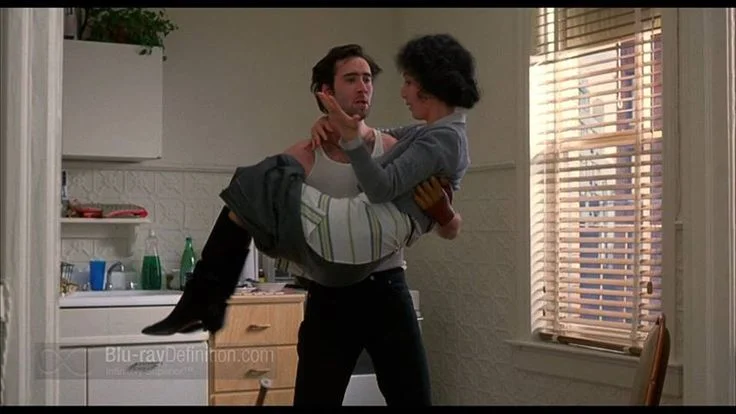
"Do you love him, Loretta?" "Ma, I love him awful. "Oh, God, that's too bad." - Cher & Olympia

Comment
  • Blog
  • Older
  • Newer
Featured
Dec 10, 2018
Ring in 2019 with a new approach to parenting teenagers!
Dec 10, 2018
Dec 10, 2018
Apr 11, 2018
Love is a Good Local Bookstore (#TatteredCover)
Apr 11, 2018
Apr 11, 2018
Apr 3, 2018
Big Week in Denver! Tune in; Come Join Me!
Apr 3, 2018
Apr 3, 2018
Mar 22, 2018
Event Tonight for Proactive Parents! 03.22.18
Mar 22, 2018
Mar 22, 2018
Feb 26, 2018
Is Family Life Kicking Your A**? [A Reminder: Teens Are Exhausting, but Worth It]
Feb 26, 2018
Feb 26, 2018
Feb 9, 2018
Galentine’s Day Gift Ideas for Mamas of Teenagers
Feb 9, 2018
Feb 9, 2018
Jan 30, 2018
How to Find the Funny When a Teenager is Bringing You Down
Jan 30, 2018
Jan 30, 2018
Jan 25, 2018
New in 2018!
Jan 25, 2018
Jan 25, 2018
Jun 20, 2017
Share Your Wisdom! How do you handle summer curfew for teens (and almost teens)?
Jun 20, 2017
Jun 20, 2017
Apr 12, 2017
New Article in YOUR TEEN Magazine: Meet Teens Where They Are . . .
Apr 12, 2017
Apr 12, 2017
Jan 9, 2017
Three Ways to KNOW Who Your Teenagers Really Are
Jan 9, 2017
Jan 9, 2017
Dec 19, 2016
What to Give Teens for Christmas? (Best-Worst Gift EVER.)
Dec 19, 2016
Dec 19, 2016
Nov 22, 2016
#Grateful: Thanksgiving Pondering for Parents of Teenagers
Nov 22, 2016
Nov 22, 2016
Nov 6, 2016
Election Edition: SHELTER FROM THE STORM
Nov 6, 2016
Nov 6, 2016
Oct 7, 2016
"Hey! This is the first time I've done this! Help me!" (Keepin' It Real with Teenagers)
Oct 7, 2016
Oct 7, 2016
Sep 27, 2016
Role Models Who HONOR
Rock + Hard Place = Parenting. Chart Your Course and Sail On.
Sep 27, 2016
Role Models Who HONOR
Sep 27, 2016
Role Models Who HONOR
Sep 22, 2016
Hope for Frazzled Families: Live Event 9-29-2016, Denver South HS
Sep 22, 2016
Sep 22, 2016
Sep 9, 2016
You Are HERE: How to Tell You’ve Entered Teenage Wasteland (Chapter 2, Part 2)
Sep 9, 2016
Sep 9, 2016
Sep 4, 2016
"What Happened to My Kid?" A Parent's Lament (Chapter 2, Part 1)
Sep 4, 2016
Sep 4, 2016
Aug 31, 2016
This Child of Ours: Grief.
Aug 31, 2016
Aug 31, 2016
facebook instagram-unauth
  • About BEYOND MAMA BEAR
  • About Me

©BeyondMamaBear 2014

LISA LANE COMEDY

finding the funny in parenting, marriage, and middle age

facebook instagram-unauth